
Impact story
Why Clean Water Matters in Inclusive Schools: Lessons from Senye Primary
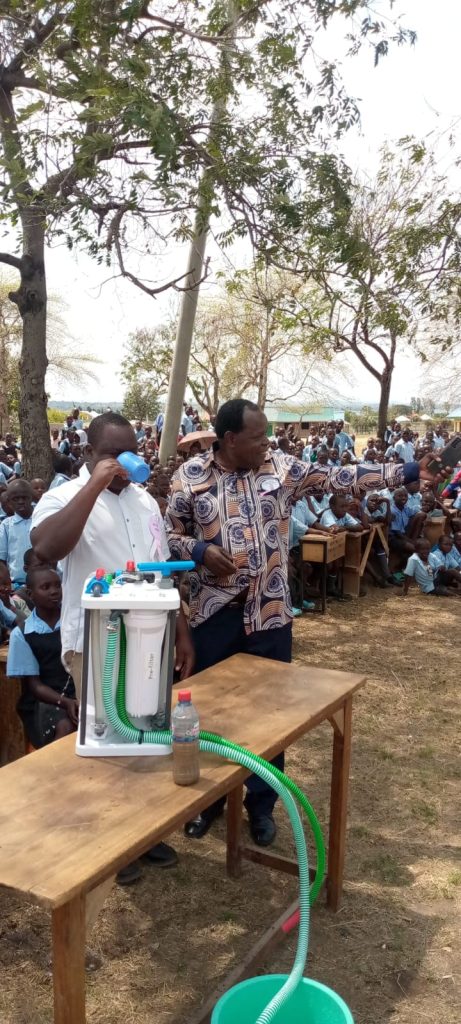
When people discuss inclusive education, the conversation often starts with curriculum, teacher training, and access to classrooms. Those are critical pieces. But in real school environments, inclusion can be won or lost through very practical conditions: hygiene, health, and the basic infrastructure that allows children to participate every day.
At Senye Primary School, one of the important lessons has been exactly this: if we want children to learn, we have to protect the conditions that make learning possible.
Following school-based screenings, it became clear that eye and ear health concerns were affecting children’s comfort, attendance, and engagement. For learners already facing disability-related barriers, these additional preventable health issues can become another reason they miss school, withdraw from class activity, or fall behind. What may look like a minor facility gap quickly becomes an education gap.
That is why installing a water filtration unit at Senye was not treated as a side project. It was part of the inclusion strategy. Reliable access to safe water made it easier for children to wash safely, maintain hygiene, and reduce everyday health risks that interfere with school life. Teachers and caregivers repeatedly emphasize that support systems work best when they are connected. Health, dignity, and education are not separate tracks for children; they are one lived experience.
Clean water in this context also supports dignity in ways that are easy to underestimate. For many children, especially those managing health vulnerabilities or mobility challenges, being able to clean up safely at school can reduce anxiety and social discomfort. That matters for confidence. It matters for participation. It matters for whether a child feels school is a place where they belong.
The lesson from Senye is not that one intervention solves everything. It is that practical interventions create momentum when they are tied to broader goals. In our case, those broader goals include inclusive classroom practice, better teacher support, stronger links between families and schools, and sustained community engagement around children with disabilities.
This is also where partnerships matter. Inclusive education is stronger when local schools, families, community actors, and institutional partners are aligned around concrete priorities. A filtration unit is one tangible example of that alignment: a practical response to a real barrier, implemented within a larger commitment to inclusion.
For supporters and partners, this is an important reminder that impact is often built through consistent, practical decisions. Not every step will look dramatic from the outside. But when a child can attend school more comfortably, when preventable health pressure is reduced, and when the learning environment becomes more responsive, those steps are significant.
At Senye, clean water became more than infrastructure. It became part of a wider promise: if we are serious about inclusive education, we must strengthen the everyday conditions that allow every child to learn with dignity.